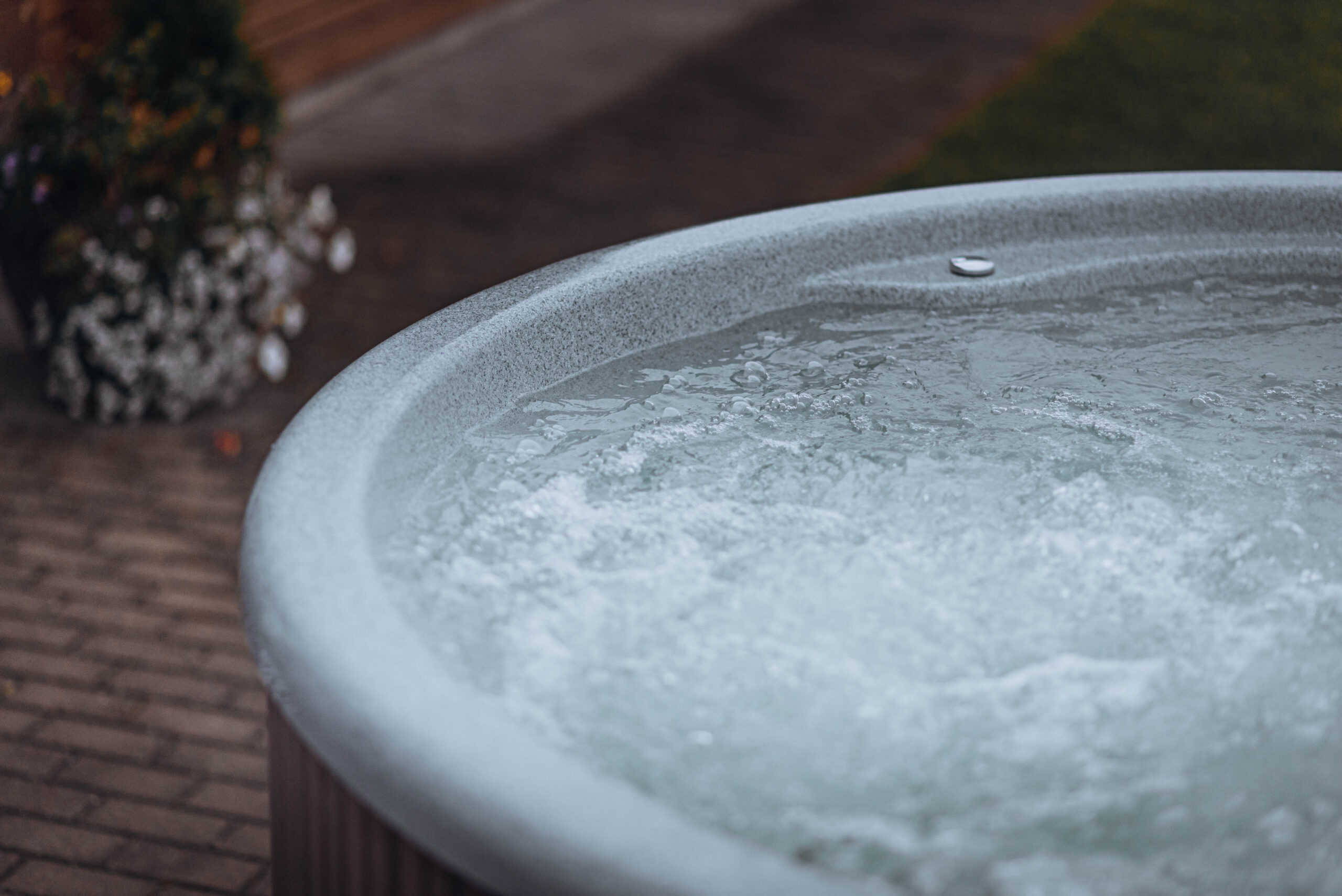
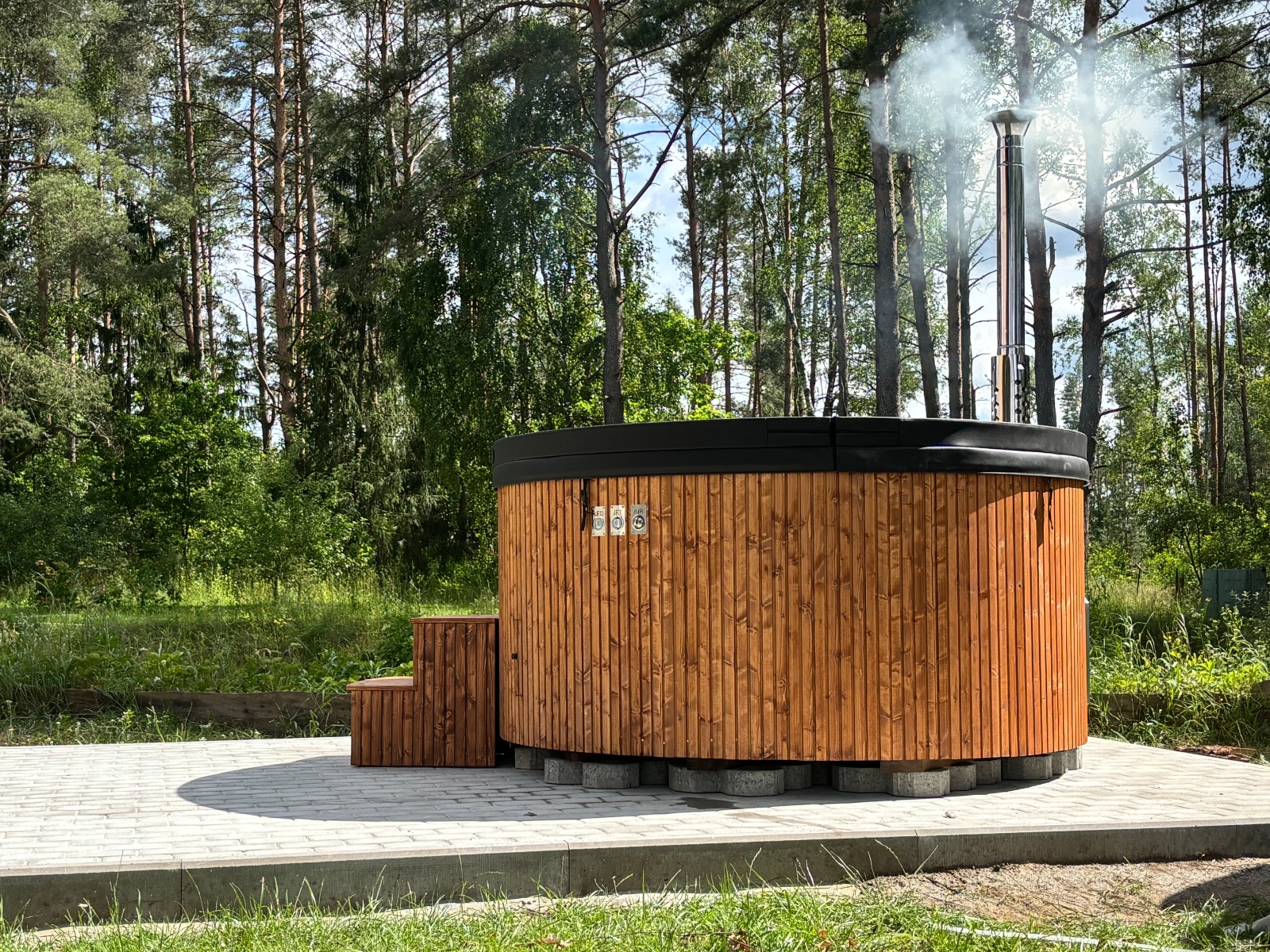
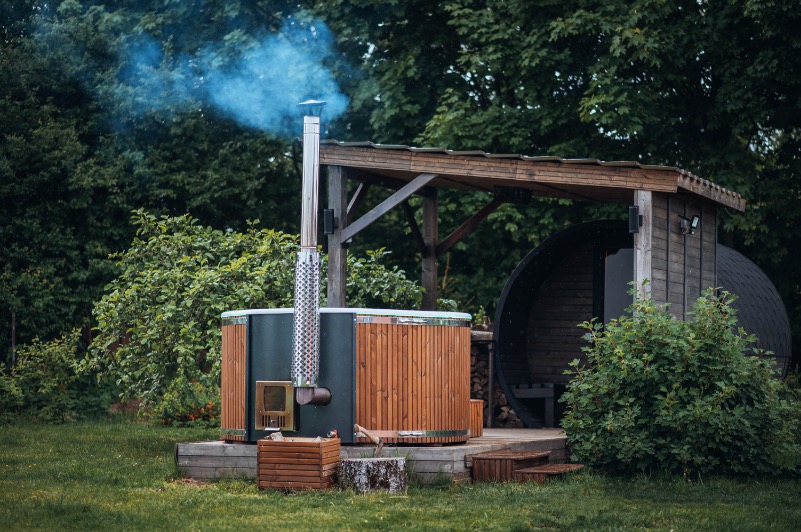
Winter is the season an outdoor hot tub was made for. Steam rising into freezing air, snow on the lid, water at 38 °C. But knowing how to prepare your outdoor hot tub for winter is essential, because winter is also the season when improper preparation can cause serious damage — almost always for the same reason: water left inside an unheated tub.
At Maudis, we have been manufacturing wood-fired and electric hot tubs in Lithuania since 2011, and we ship them to some of the coldest markets in Europe: Norway, Sweden, Finland, and the Baltics. The recommendations below are not generic spa advice. They come directly from our own user manual and warranty terms, so they apply to the exact hot tubs we build, whether yours has an integrated wood-fired heater, an external heater, a Gecko electric heating system, or a hybrid of both.
Everything starts with one decision: will you use your hot tub this winter, or not? The answer determines everything else you need to do, so this guide is split into those two parts.
Why winter preparation matters, and why it looks different across Europe
Cold weather is hard on a hot tub. Freezing air and freezing water put strain on parts that work hard enough already: the heater, the connections, the wood on the outside. Left unattended, small problems in October can turn into costly repairs by February. Winter cold can affect:
- water quality
- heating efficiency
- the hoses and connections between the heater and the tub, right through to the drain
- insulation
- the timber exterior finish
- filtration systems, on models fitted with a skimmer, such as the Quadro Spa Lounge
Proper preparation prevents frozen connections, wasted energy, contaminated water, and premature wear, but how much margin you have depends on your climate.
What “prepared properly” means, though, depends on where your tub stands. A hot tub in a garden near the North Sea coast lives through a very different winter than one in Lithuania or inland Norway. In the UK, the Netherlands, or western France, frost arrives in short episodes and rarely holds for long. In the Baltics and the Nordics, temperatures can stay between –10 °C and –20 °C for weeks. Central Europe often gets the most treacherous pattern of all: repeated freeze–thaw cycles, where meltwater refreezes overnight.
Proper preparation prevents frozen connections, wasted energy, contaminated water, and premature wear, but how much margin you have depends on your climate. The core rule does not change: water must never be left standing in an unheated hot tub when the temperature can drop below zero. In a mild climate, you might get away with a delayed draining once. In a Baltic winter, you will not.
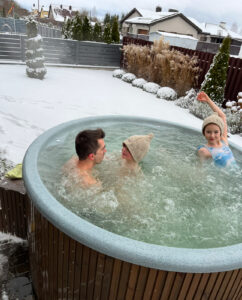
An electric-heated hot tub being used in the middle of a Lithuanian winter. Unlike a wood-fired tub, an electric system can maintain the desired water temperature continuously and automatically, keeping the hot tub ready to enjoy even when outside temperatures drop below freezing.
A note on fiberglass liners and OsmoGuard®
Maudis fiberglass hot tubs come with a choice of two liners: our standard fiberglass liner and a liner with OsmoGuard® anti-osmosis protection. Both are well built, and which one suits you best depends on how you actually use the tub.
If you bathe in sessions, fill the tub, enjoy the water, then drain it afterward, the standard liner is an excellent, straightforward choice. OsmoGuard® earns its place when you want to keep the same water in the tub for longer, say a couple of weeks, topped up with a gentle water care routine instead of draining after every use. That is exactly the situation its anti-osmosis protection is built for: it shields the fiberglass shell from the damage that prolonged water contact can otherwise cause.
What OsmoGuard® does not do is protect against ice. Freezing water expands with enough force to crack a liner or split a heater, regardless of the shell technology. So if your hot tub has an OsmoGuard® liner and you keep water in it for those longer stretches, the same core rule from above still applies: never leave water standing in the tub, without heating, when the temperature can drop below zero. Damage caused by frozen water inside the hot tub or heater is explicitly excluded from the Maudis warranty, which is exactly why this guide exists.
Part 1: using your hot tub throughout winter
Winter bathing is not only possible in a Maudis hot tub, it is the best version of the experience. How you manage it depends on your heating system.
Start every season with a level check
When your hot tub was installed, you made sure it stood level on solid ground. That is the right starting point, but it is only the starting point. Ground settles, timber decking moves with moisture, and frost itself can shift a base over time, so a foundation that was level in spring is not guaranteed to still be level by autumn.
Before winter arrives, and ideally at the start of every season, check again that your hot tub is standing perfectly level on a firm, even surface. A tub weighs up to two tonnes when filled, and if it stands tilted, the water and the structural load distribute unevenly, which over time leads to a range of failures: leaks, strain on the liner, and problems with the heater connections. This is not only a winter issue, but frost cycles and a shifting base make it worse, so autumn is the right moment to verify it.
Wood-fired hot tubs (integrated or external heater)
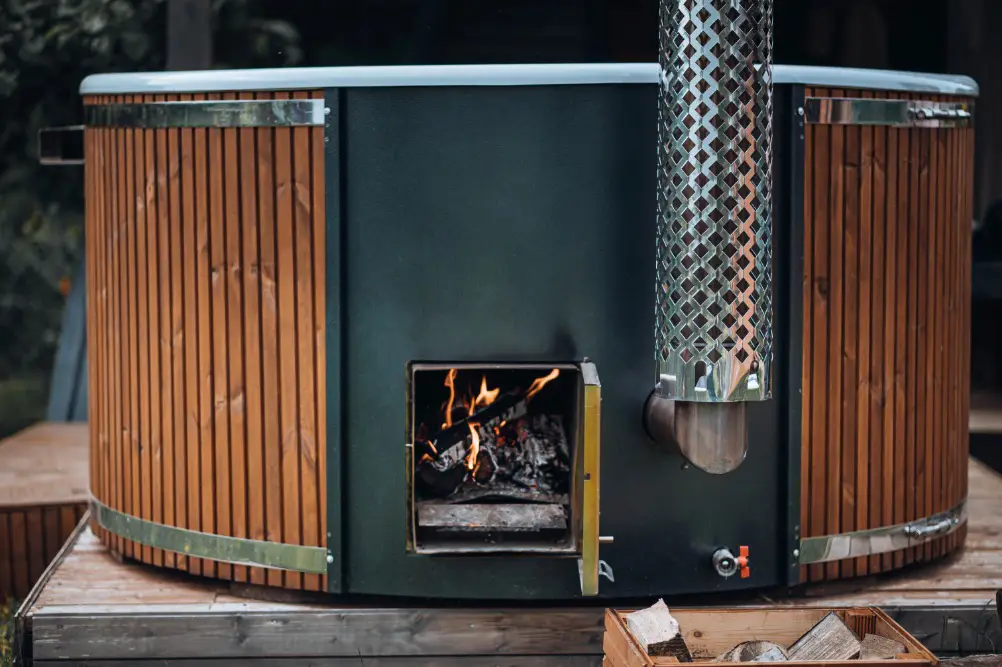
Our wood-fired heaters are made from AISI 304 stainless steel and come in two configurations: an integrated heater built into the tub and an external heater connected by hoses. Both work year-round, but winter asks a little more of you.
- Use dry, finely chopped firewood. Damp or coarsely split logs noticeably extend heating time, and in winter you are already working against colder starting water.
- Keep the insulated lid on while heating. Most heat escapes through the water surface. With the lid on, an integrated heater brings the water to bathing temperature in roughly 1.5–2 hours and an external heater in 2.5–3 hours; in deep frost, plan for the upper end.
- Never light the heater in a partially filled tub. The tub is full enough when about 10 cm remains below the top edge. Firing an underfilled tub can damage both the heater and the liner, and this damage is not covered by warranty.
- Drain after bathing if the tub will not be heated again soon. A wood-fired tub without electric heating has no way to keep itself above freezing. Let the fire burn out completely, with no embers left, then drain the tub through the drain valve. Draining while the stove is still hot can damage the heater and deform the liner.
- Clean the ash out of the heater after use. Once the stove has fully cooled, empty the ash tray and remove ash from the combustion chamber. A clean stove burns more efficiently the next time you light it, and in winter, when heating already takes longer, that difference is noticeable. Leftover ash also holds moisture, which promotes corrosion inside the stove.
- With an external heater, make sure the heater itself is fully drained. Water remaining inside the heater jacket will freeze and destroy it. This is the single most common winter damage we see, and it is entirely preventable.
- Leave the hot tub closed with an insulated cover between uses, so rain and meltwater cannot collect and freeze inside the tub.
Electric heating: the Gecko system
Maudis hot tubs with fiberglass or 3D Granite shells can be equipped with the Gecko in.ye-V5 electric heating system, operated from a touch control pad. Set your temperature on the pad once, and the system holds it steady on its own, continuously. For winter use, this changes the picture completely, because the tub now keeps itself warm around the clock, not just while you are heating it up for a soak.
- Keep the system powered and the water at a maintenance temperature. Holding a stable temperature costs less energy than reheating cold water from scratch. From a 27 °C standby temperature, the Gecko system reaches a 37 °C bathing temperature in about 3–4 hours; heating a fully cold tub takes around 6–8 hours.
- The built-in freeze protection is a safety net, not a strategy. Gecko’s Smart Winter Mode detects freezing risk and periodically circulates water through the pipes to keep it moving. It only works while the tub is powered and filled, so treat it as backup protection and check on the tub after any power outage.
- A quality insulated lid is one of the most important things to get right in winter. Keep it on while the water heats up, because most heat escapes through the surface, and an open tub in frost heats noticeably slower. Put it back on immediately after bathing, and keep it on whenever the tub is not in use: it keeps a freshly cleaned tub clean, stops snow from falling in and freezing inside, keeps leaves and debris out of the water, and prevents anyone or anything from falling in.

If you plan to use your hot tub throughout winter, a few simple precautions will help protect the tub and heating system from freezing temperatures.
Hybrid heating: the most winter-proof setup
For customers who bathe often in winter, we build hybrid hot tubs that combine a wood-fired heater and the Gecko electric system in a single tub, such as the Quadro Spa Lounge Hybrid. The electric system quietly maintains the water temperature between sessions and provides freeze protection, while the wood-fired heater delivers a fast heat-up and the ritual of a real fire.
Keeping water in the tub for more than one session
As explained above, an OsmoGuard® liner is the right choice if you want to keep the same water in the tub for longer than a single bathing session. But that only works safely when the water is being heated: whenever the outdoor temperature is below zero, or could drop below zero, the water must stay heated. OsmoGuard® protects the liner from osmosis, not from freezing: water left standing in frost turns to ice, and ice will damage the liner regardless of its protection layer. The same rule applies to the standard liner.
With a wood-fired heater alone, keeping the water protected from freezing is difficult in practice. The fire would need to be kept burning around the clock, fed and tended constantly, and the moment it goes out, the water starts cooling towards freezing point. This is why keeping water in the tub through winter is realistically only an option with an electric or hybrid heating system running. With a wood-fired-only tub, the routine stays simple: bathe, drain, leave the valve open.
Hydromassage and air systems in freezing weather
If your hot tub is equipped with a hydromassage or air bubble system, two winter rules apply. Switch the massage systems on only once the water has reached 30 °C, and every time you drain the tub, run the air massage for about 30 seconds afterward to purge the remaining water out of the lines. A few tablespoons of water left in an air channel are enough to cause frost damage.
Water care and snow
Cold air does not keep water clean. Without treatment products and a filter, the water in a hot tub stays fit for bathing for roughly 1–2 days, so in winter, plan your water changes around your bathing schedule rather than leaving water to stand. Keep the bathing temperature in the recommended 37–40 °C range.
Finally, look at the area around the tub with winter eyes. Water always splashes out during bathing, and in freezing weather it turns the decking, steps, and stones around the tub into ice within minutes. Assess the surfaces you will walk on with bare, wet feet: keep the path lit, add anti-slip surfaces where needed, and clear ice regularly. After snowfall, brush heavy snow off the lid with a soft brush rather than a shovel. Slipping next to the tub is the most common winter hot tub accident and the easiest one to prevent.
Part 2: winterising a hot tub you won’t use
If your hot tub will stand unused through the cold months, the goal is simple: it should hold no water anywhere, inside the tub, the heater, or the massage lines. Done properly, this takes under an hour, and in spring you will find the tub exactly as you left it: healthy, clean, and covered by warranty.
1. Let the fire die completely. Never drain a wood-fired tub while embers are still present. Residual heat in an empty heater can damage it and deform the liner.
2. Drain the tub fully through the drain valve, directing the water away from the base so it cannot pool and freeze under the tub.
3. Empty the heater. With an external heater, physically confirm that no water remains inside it. With an electric or hybrid system, drain the heating and circulation lines as described in the manual.
4. Purge the massage systems. Run the air massage for about 30 seconds after draining to push out the water trapped in the lines.
5. Clean the liner with soap and a soft sponge, rinse with clean water, and let it dry. Never use abrasive cleaners on a fiberglass surface.
6. Leave the drain valve open for the whole winter, so precipitation cannot accumulate inside.
7. Care for the timber. Clean the spruce cladding and refresh the protective finish if needed, so moisture and frost cycles do not work their way into the wood.
8. Put the insulated lid on and leave it on. When you take it off in spring, store it raised off the ground so the inner surface stays clean.
Why so strict? Because our warranty terms are strict in the same places. Damage from frozen water, from long-term standing water (corrosion, clogged jets, osmotic damage to materials), and from heating an underfilled tub are all excluded from warranty. Winterising is not extra care, it is the difference between a covered product and an uncovered one.
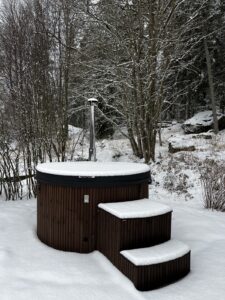
If your hot tub will remain unused throughout winter, proper winterising is essential to protect every part of the system from freezing and prepare it for the season ahead.
Frequently asked questions
1. Can I use a Maudis hot tub when it is -15 °C outside?
Yes. Our hot tubs are built for Baltic and Nordic winters. Expect wood-fired heating to take somewhat longer than in summer, keep the lid on while heating, and drain the tub and heater fully after bathing, unless an electric system is maintaining the temperature.
2. Can I leave water in the tub between winter bathing sessions?
Only if the tub has a powered electric or hybrid heating system maintaining the water above freezing. A wood-fired-only tub must be drained after use whenever sub-zero temperatures are possible. Frozen water damage is not a warranty case.
3. Does the OsmoGuard® liner protect against freezing?
No. OsmoGuard® protects the fiberglass shell from osmotic damage caused by prolonged water contact. It offers no protection against ice, so the same winter rules apply to both liner types.
4. What happens to an electrically heated tub during a power outage?
A large body of water under an insulated lid cools slowly, so short outages are not a problem. During a prolonged outage in hard frost, the freeze protection cannot run either, so if power is out for an extended period, drain the tub and heater as a precaution.
5. Does a wood-fired hot tub need special winter care?
Yes, it does, but don’t let that worry you. Winter care for a wood-fired hot tub comes down to two simple habits, not complicated maintenance.
First, once the fire has burned out completely and the stove has cooled, drain the tub through the drain valve after every session, unless you are heating it again right away. Second, clean the ash out of the tray and combustion chamber before the next firing, and check that the flue is clear.
That’s it. These two steps of basic cleanliness, together with keeping the tub covered with its insulated lid so snow and rain can’t settle inside and turn to moisture, protect the tub and heater from water freezing inside the system and the liner. A clean stove, an empty tub, and a covered tub between sessions mean a longer-lasting hot tub, and the same enjoyable soak every time you light the fire.
Winter wellness, built for real winters
Every Maudis hot tub, from the compact fiberglass Ofuro to the Quadro Spa Lounge Hybrid, is manufactured by hand in Lithuania, in a climate where winter preparation is not theory. If you are choosing a hot tub with year-round bathing in mind, an electric or hybrid heating system is worth serious consideration, and our team is happy to advise on the right configuration for your climate.
Explore our collections:
Outdoor Hot Tubs
Fiberglass Outdoor Hot Tubs
Quadro Spa Hot Tubs
Cold Plunge Tubs
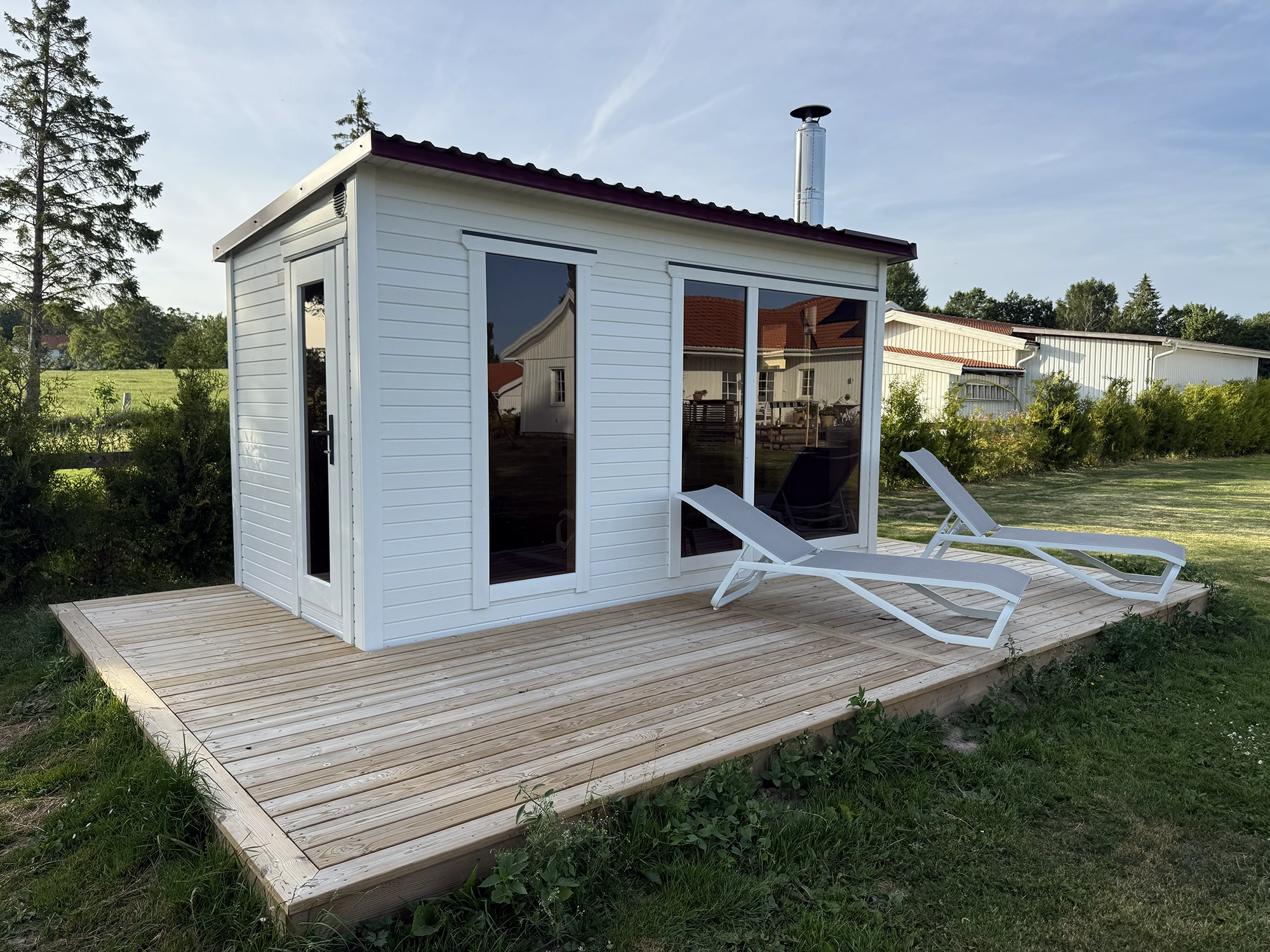
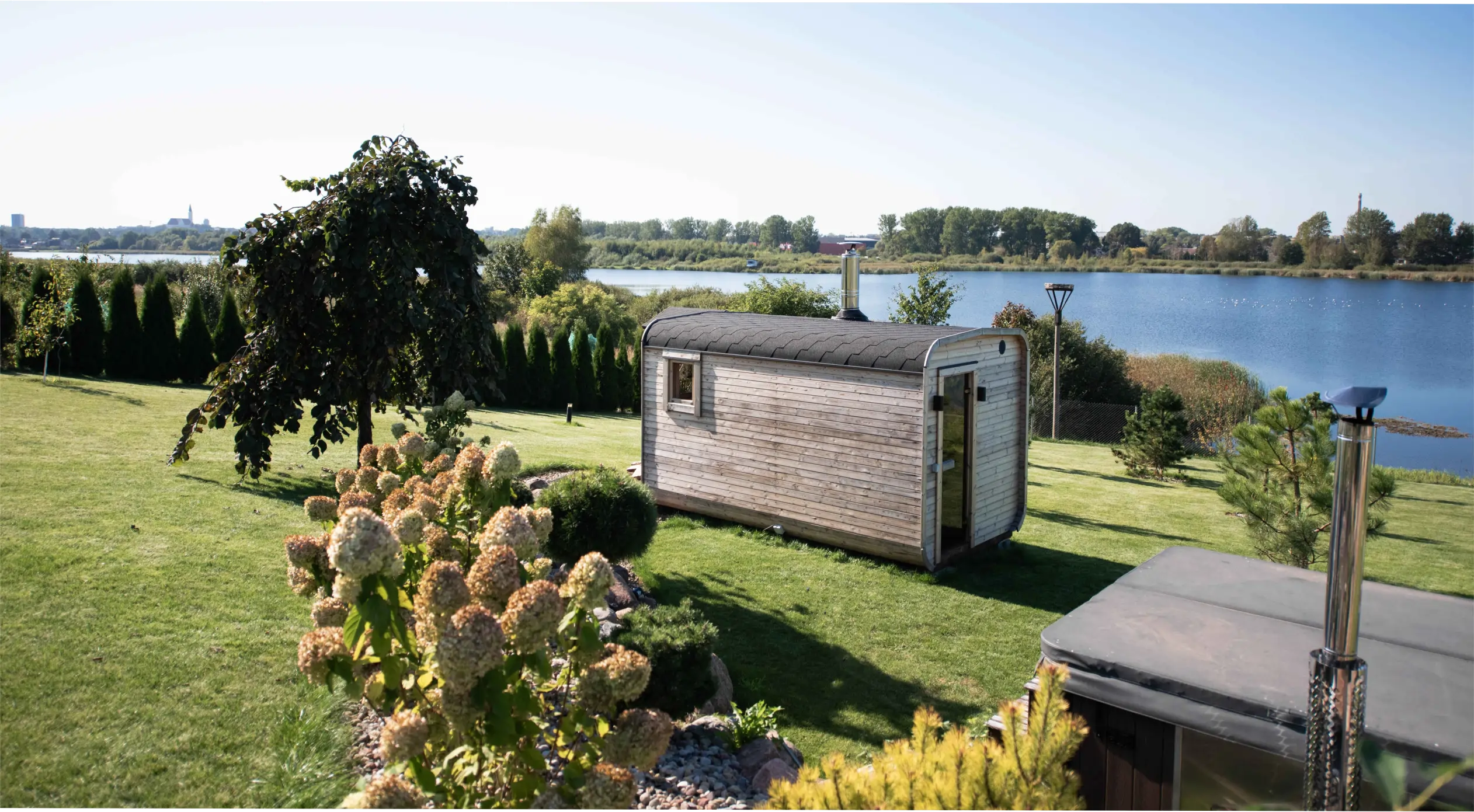
Planning a complete outdoor wellness area? Pair your hot tub with one of our outdoor saunas and let winter become the season you look forward to most.